
Learning at Altitude
Banff, one year on — permission, pressure & practice.
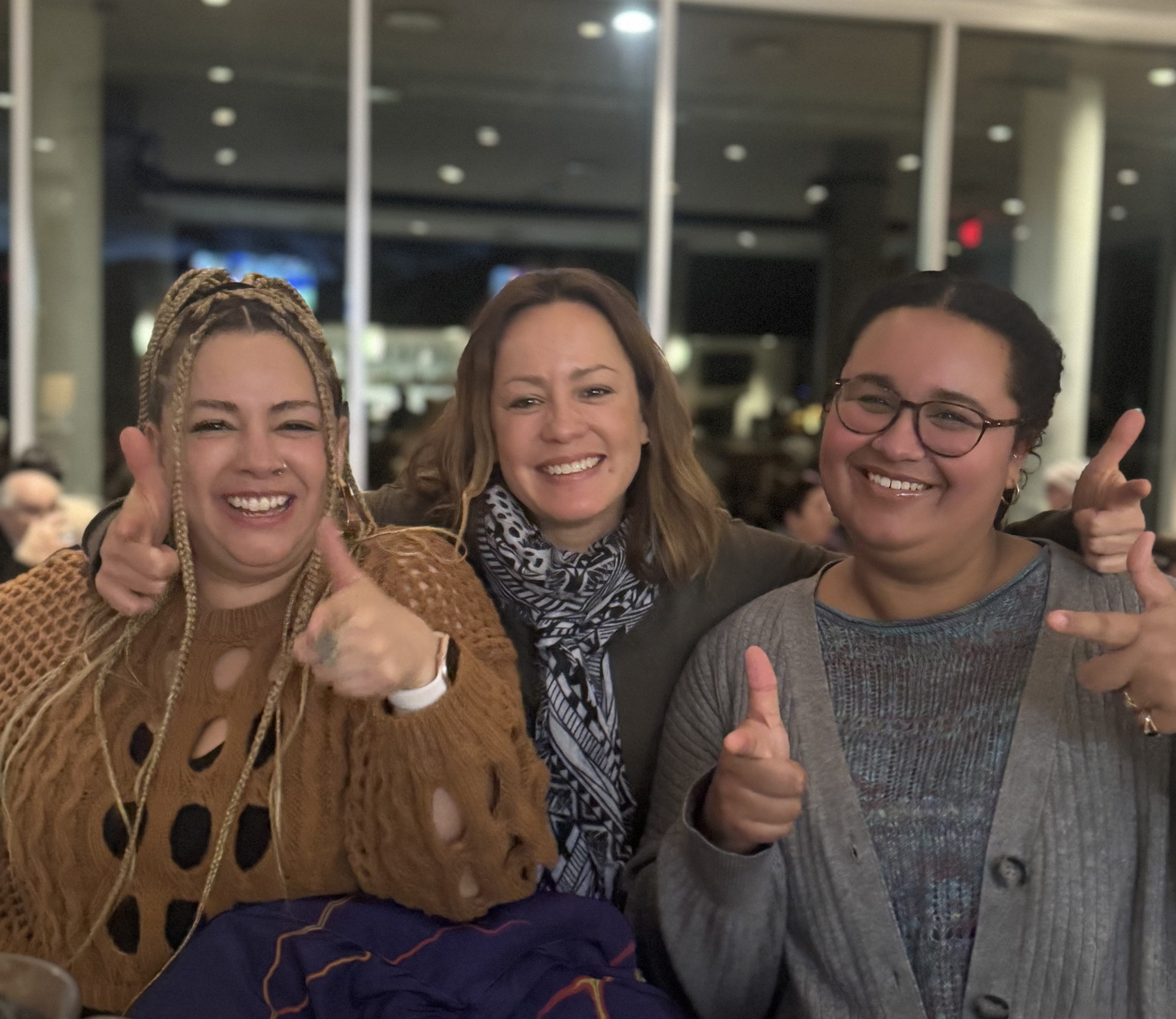
IIt’s been a year since Banff. And I still feel its echoes in my life.
The Banff Winter Writers’ Residency was a reminder, but not in a neat before-and-after way. It worked more quietly than that — like a change in pressure. A recalibration. It granted me permission for things I didn’t yet know I was holding.
At altitude, everything requires a different kind of attention. There’s pressure, but it’s about performance, but rather the pressure of being held to the work — by the place, and the people around you.
The days had weight, and so did the conversations. But there was also a lot of levity, conviviality and ease.
What stays with me isn’t the scenery (though yes), or my studio (very much yes!), but the experience of being in conversation with other writers who were paying close attention.
Writers who listened carefully.
Who asked better questions than the page alone.
Who made room without competing for it.
I asked three questions of our January 2025 cohort:
(1) what stayed with you from Banff, one year later;
(2) what changed in your writing life since then; and
(3) whether there’s one moment you still think about.
Here is what a few of my fellow Winter Writers had to say:
Pacinthe Mattar
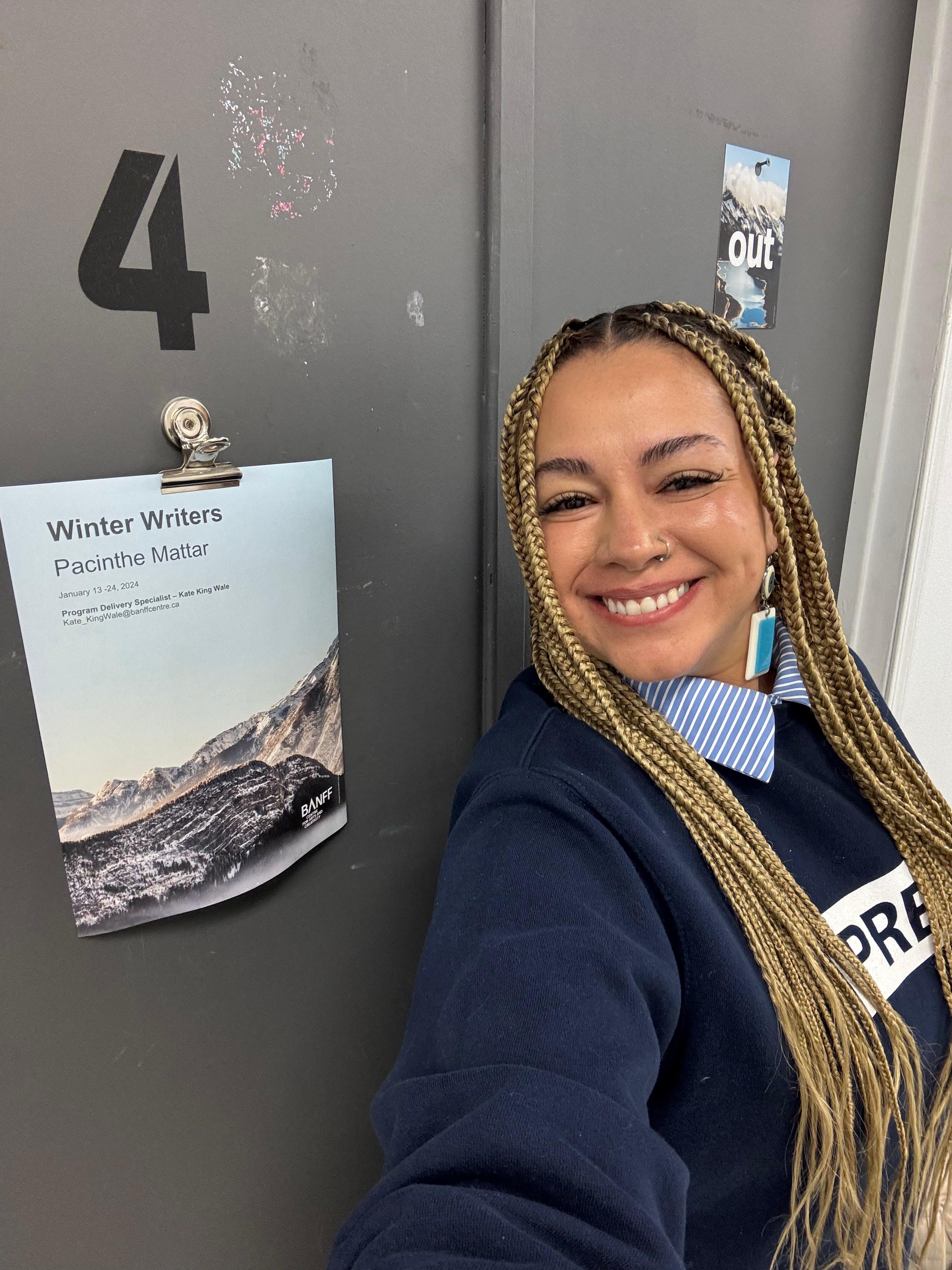
1. The friendship, kinship, support, and warmth of the Banff writers. We met as strangers, or distant peers, and left feeling like some kind of literary, mostly-functional family in just two weeks. It’s been delightful and life-affirming for those ties we developed to still be bound together today. This crew disabused me of the idea that you can be either a) talented or b) kind or c) brave. Nah. Get you some writer friends that are fiercely and undeniably all three.
2. Banff was the first place I introduced myself as a writer first, and not a journalist or producer as I have in the past. I don’t believe these roles are mutually exclusive, but ‘coming out’ as a writer from my traditional mainstream journalism background felt like a kind of freedom, an opening, to write more truthfully, clearly, and unflinchingly. I’ve been a contributing writer for The Walrus since, where I’ve written about everything from my dog, Hobbes, the alarming but unsurprising ‘DEI’ backlash, and the bravery of the student press, especially in chronicling the genocide in Gaza, and the campus encampments that sprang up to say no to universities’ investment in the carnage.
3. It’s so hard to choose just one moment, but here are a few that come to mind: the brilliantly sunny day we stripped out of our professional writerly armour and spent the day soaking in steamy hot springs, and the iconic group and individual photo shoots that followed; the night me, Cara, Sumia and Danez sang and danced our hearts out at the hottest spot on the town in Banff, High Rollers; introducing myself to my mentor Banff Omar El Akkad whose at-the-time forthcoming book One Day Everyone Will Have Always Been Against This received the National Book Award ten months later, and him responding with not a ‘nice to meet you’ but ‘I’m such a big fan of your work’; being sandwiched between Omar and Shad [Banff music faculty and Juno award winning artist] at MacLab and sharing a plate of fried halloumi and shishito peppers while talking about Kendrick vs. Drake, writing, and more; the night Sumia invited us to gather in her studio to read words by Palestinian writers and poets to mark the “ceasefire” that never was.
Misha Solomon
(1) The biggest thing that has stayed with me is the sense of being a “real artist.” I never felt like that before Banff, and at Banff I felt like an artist for the first time, and the feeling has stayed with me. That, and the sense of community. I’m lucky to have a great writing community here in Montreal, but the new friendships I made at Banff and the feeling of community have stayed present.
(2) My book is almost out! And I started a PhD. I’m not writing as many discrete poems as I was at Banff, but I’m trying to think about my writing as part of a larger project.
(3) I fell into such a routine at Banff, and so there are two repeated moments that I think about often. The first is the feeling of being in my studio in the morning, with the sun shining through the windows. And the second is all of our meals together, with our cohort and Danez and Omar.
Kim Dhillon
To answer your question, I still think about Banff a lot. Like, a lot. It imprinted on me and something about the space and the air and the time and the feeling is locked deep within me. It was one of the most special experiences of my writing life. I had been to Banff before, but that was on a solo, one week residency in the summer for a poem I won a prize for. This felt different. I have often, in the past year, when I’m down on myself or stuck in the project or feeling like a failure, reminded myself that I was picked for this thing, and the other people who were picked are amazing, so there must be something in me or my project worthwhile and just get on with it. I have three kids, like Cara, and I was so so glad to have some time and space when I was there that I was a little anti-social. I kind of feel bad about that now. Like I missed out. But I also wasn’t capable of being more social, so it is what it is. I miss the pool. I miss being fed. I don’t miss how dry my skin was. I set unrealistic deadlines for myself and thought I would finish my novel there. Ha! I am almost done this draft now, a year later.
I’m grateful to still be in conversation with these people — on the page and beyond it.
For me, the residency didn’t end when I left. It still reverberates. It resurfaces later in my drafts, in my confidence, and especially in how I show up for other people.
Since Banff, I’ve carried the work forward a little differently — and truer to who I am. I’m less interested in permission now, and more invested in initiative — building rooms others can step into.
And maybe anniversaries exist to remind us of what can last.
A year on, I’m still grateful.
With love and intention,
Cara
P.S. Archipel is built on generosity — of story, of craft, of connection.
Support from readers sustains the writing here and helps projects like the DEW Scholarship to continue growing in practice.
Subscribe and stay in the current with us
Visit my Support page
Make a small offering on Buy Me a Coffee
Thank you for being a part of this ecosystem.
Loved these photos; more, your lingering experience and the stories of your colleagues. (Always happy to occupy a small corner in one of your "rooms.")